Best Website Builder for an Online Store in 2026 (Tested With Real Stores)

The best ecommerce website builder for online store owners in 2026 isn’t the one with the flashiest homepage template — it’s the one that matches how many products you’re actually selling. That sounds obvious, but it’s the exact thing most “top 10 builders” articles skip, because most people writing them have never had to process a real order, manage real inventory, or deal with a real refund at 11 pm.
I have. I’ve run Hostinger’s builder for over two years and used Shopify for more than one, including a personal dropshipping clothing store that carried over 1,000 listed products. This guide is built from that experience, not just a spreadsheet of feature lists. If you’re still deciding whether your business needs a dedicated store at all, the broader guide to the best website builder for small business covers general-purpose builders too.
How I Evaluated These Builders
This comparison leans on two different kinds of evidence, and it’s worth being upfront about which is which. For Hostinger and Shopify, the claims below come from actually running stores on those platforms — years of uptime, real support tickets, and, in Shopify’s case, a catalog that grew past 1,000 products. For Wix and Squarespace, this review draws on current pricing, feature sets, and transaction-fee structures rather than operating a live store on either one. Both kinds of evidence are useful, but they’re not interchangeable, so each review below flags which is which.
Best Website Builder for Online Store: Quick Answer
If you’re selling under 50 products and want the lowest cost, Hostinger’s Business Website Builder is the best value — full ecommerce from roughly $3.79–3.99/month depending on the term you pick, with 0% transaction fees. If you’re planning to scale past a few hundred SKUs, run wholesale, or need a serious app ecosystem, Shopify (starting around $29–39/month depending on billing cycle, plus roughly 2.9%+30¢ per transaction) is the platform actually built for that load. Wix and Squarespace land in between, favoring design and simplicity over raw scale.
Some links in this article are affiliate links. If you click through and sign up, I may earn a small commission at no extra cost to you. I only recommend tools we’ve either used directly or researched thoroughly.
Affiliate disclosure: Some links in this guide earn a small commission at no extra cost to you. It helps keep the site running — and it doesn’t change which tools are recommended or why.
The Quick List: 4 Best Website Builders for an Online Store
- Hostinger Business Website Builder — cheapest way to launch a real online store, 0% transaction fees, ideal for under 500 products.
- Shopify Basic — the industry standard for serious ecommerce, built to handle inventory-heavy stores without breaking.
- Wix Business Basic/Core — best balance of design freedom and beginner-friendliness, 0% fees with Wix Payments, and a large template library to start from.
- Squarespace Commerce — best for design-led brands with small, curated catalogs (under 50 SKUs) where photography and layout carry the sale.
Platform Reviews
Hostinger Business Website Builder — Best Cheap Option
I’ve used Hostinger for hosting and site-building for over two years now, so this isn’t a one-week trial review. It’s based on watching how it actually performs over time. Uptime has been consistently solid, support tickets get answered fast, usually within minutes on live chat, and the builder itself has improved a lot since I first started using it.
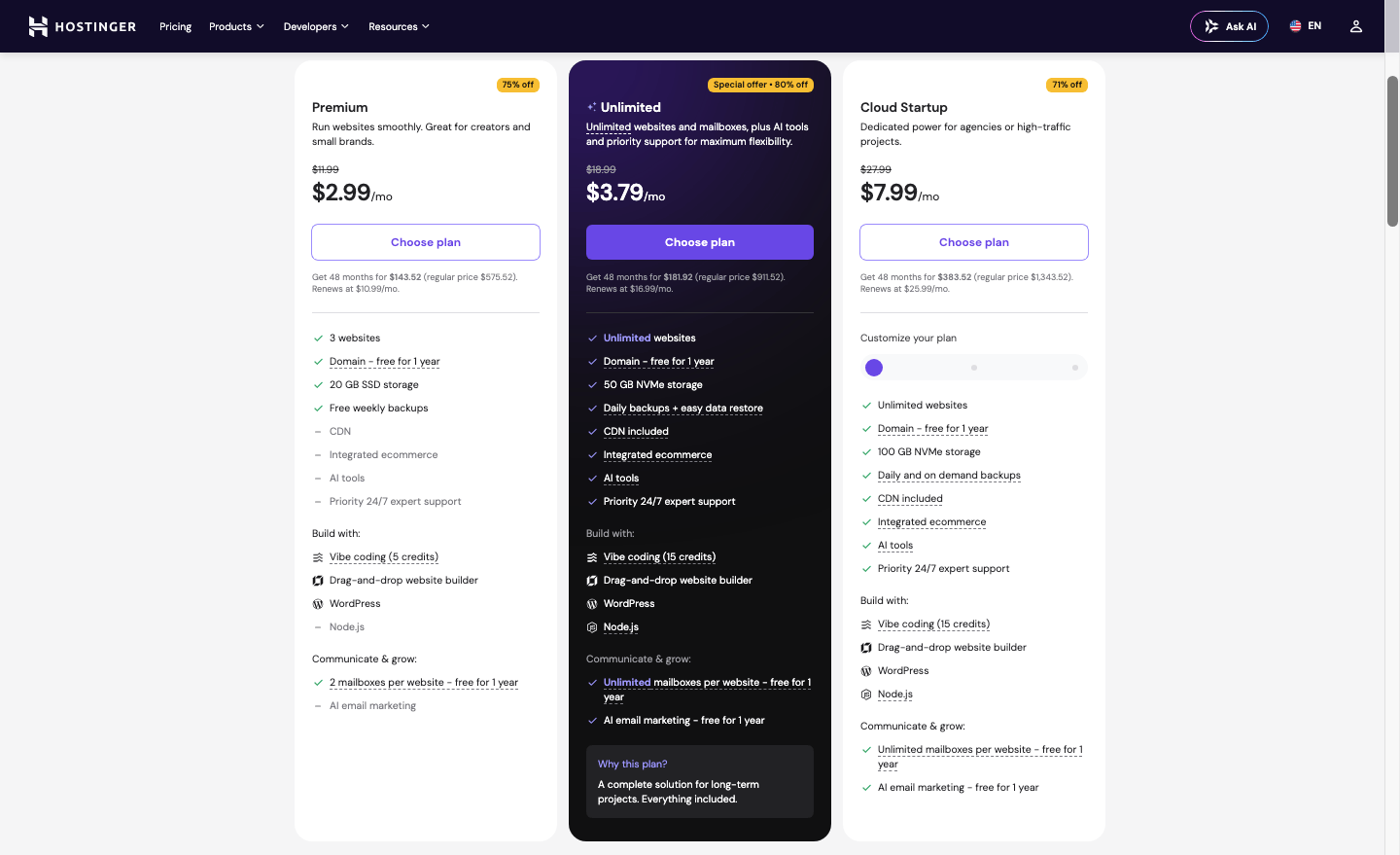
For ecommerce specifically, Hostinger’s Business plan starts around $3.79–3.99/month on longer-term billing and supports up to 500 products, with 0% transaction fees on sales. That last part matters more than people realize. On Wix or Squarespace’s lower tiers, a percentage fee quietly eats into every sale you make, but here there’s nothing skimmed off the top. If budget is your single biggest constraint, it’s worth seeing how this plan stacks up against other low-cost options in the cheapest website builder for small business roundup.
Hostinger also bundles AI tools for writing product descriptions, which is a real time-saver if you’re building out a catalog solo. If you want to see how those AI features perform beyond just ecommerce, the Hostinger AI website builder review covers them in more depth.
Here’s the catch: Hostinger’s ecommerce features are genuinely good for a small store, but they’re not built for massive product ranges or complex fulfillment logic. If you’re selling 20–300 products with straightforward shipping, it’s excellent. If your fulfillment process is simple — you pack and ship orders yourself, or use a single supplier — Hostinger handles that without friction. If you need advanced inventory rules, multi-warehouse logistics, or a huge app marketplace, you’ll outgrow it eventually.
Time estimate: a basic 20–30 product store can realistically go live in a weekend with Hostinger, even if you’ve never built a website before.
Shopify — Best for Real Scale (5 Years, 1,000+ SKUs)
This is the section where lived experience actually changes the verdict. I ran a personal dropshipping clothing store on Shopify for one and a half years, with over 1,000 listed items at its peak. The store isn’t active anymore, but here’s what that scale taught me: Shopify’s marketing claims about handling large inventories aren’t just copy. The platform held up. Checkout stayed reliable, inventory sync across that many SKUs didn’t fall apart, and the app ecosystem — over 6,000 apps — let me bolt on functionality I needed without touching code.
In plain English: Shopify is the platform built for operational complexity, not just pretty storefronts. Shopify Basic starts around $29/month on annual billing, closer to $39/month if you pay monthly, and if you use Shopify Payments, you’ll pay roughly 2.9%+30¢ per online transaction. Skip Shopify Payments for a third-party processor, and you’ll also eat an extra fee on top of whatever that processor charges.
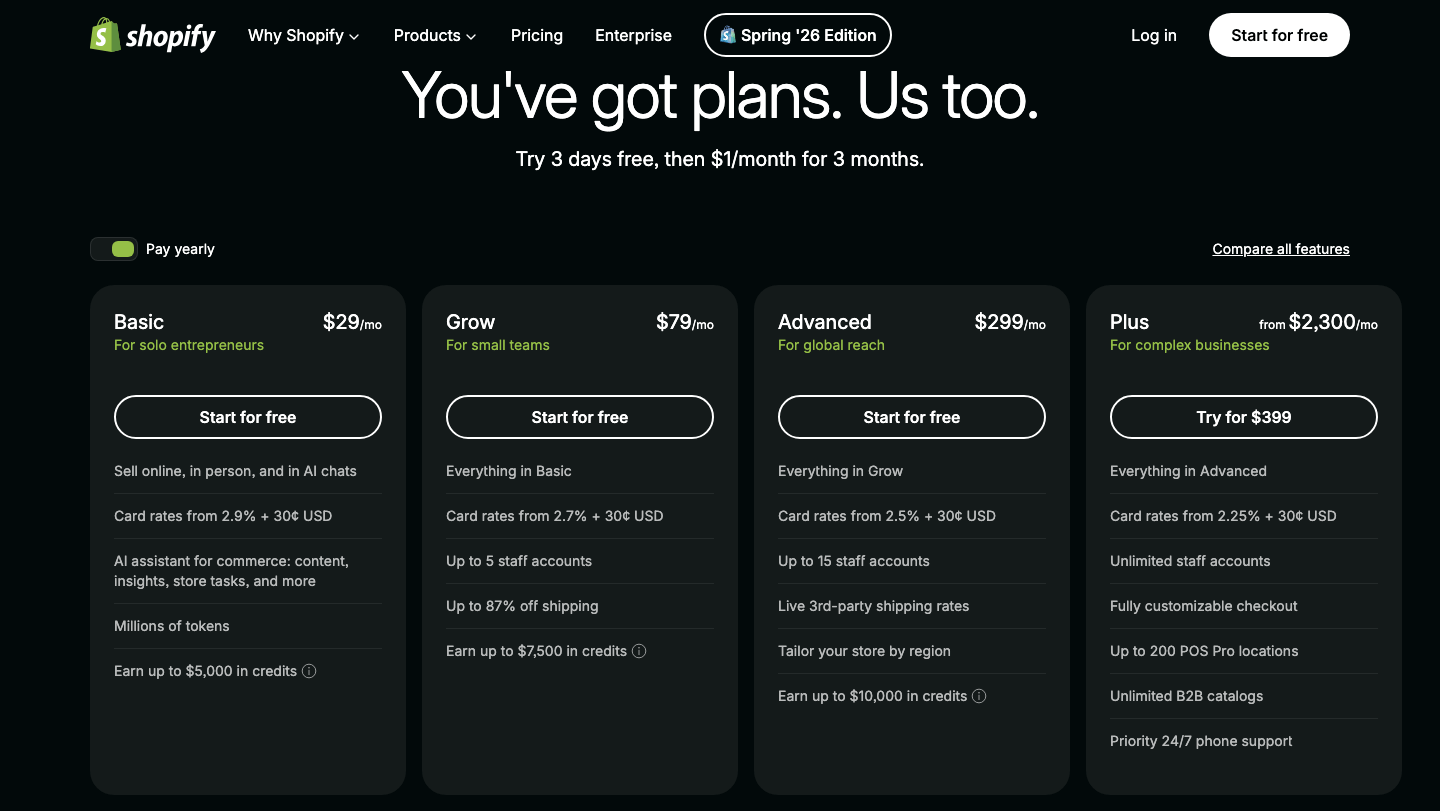
Prices may vary by location and promotional offers. Please check the current pricing before you buy.
What I learned running 1,000+ SKUs: the monthly fee is the smallest cost. The real cost driver at scale is apps (inventory sync, reviews, upsells) and transaction fees compounding across volume. Even a lean setup usually ends up running three or four paid apps once you factor in shipping calculators, review widgets, and abandoned-cart recovery. If you’re only planning 30 products, Shopify is overkill and overpriced. If you’re planning to genuinely scale, it’s the one platform in this list I can personally vouch for under real load, not just marketing pages.
Who Shopify is NOT for: hobbyists, single-product stores, or anyone allergic to a monthly subscription plus per-sale fees. For that crowd, Hostinger or Wix are cheaper, simpler to manage, and less operationally demanding day to day.
Wix Business Basic/Core — Best for Design-Conscious Beginners
Full disclosure: unlike the Hostinger and Shopify sections above, this one is built from research and feature comparison rather than months of running a store on Wix myself, and it’s worth being upfront about that.
Wix’s ecommerce plans start around $17–23/month depending on the tier, and with Wix Payments you get 0% transaction fees, which puts it in a similar cost bracket to Hostinger once you factor that in. Wix offers over 800 templates and a genuinely beginner-friendly drag-and-drop editor, arguably the most flexible visual editor of the group.
The tradeoff is that flexibility can slow you down; it’s easy to spend hours tweaking layouts instead of launching. For example, a small candle or skincare brand with 40–60 products and a strong visual identity tends to do well here, since the editor rewards spending time on layout without punishing you with per-sale fees. For a closer side-by-side look at how its editor compares to the alternatives, see the Wix vs Squarespace vs Hostinger comparison.
If you want more design control than Hostinger offers but don’t need Shopify-level ecommerce infrastructure, Wix is a sensible middle ground.
Squarespace Commerce — Best for Small, Design-Led Catalogs
Squarespace is also assessed through research rather than personal use. Its ecommerce story in 2026 is straightforward: it’s the best-looking option here, and the most limited on transaction-fee flexibility at the entry level. The Business plan, around $16/month, still carries a 3% transaction fee, while Commerce plans starting around $23/month drop that to 0%.
With roughly 180 curated templates, Squarespace produces some of the most polished storefronts without much design effort. It’s the right pick if you’re selling under 50 SKUs — think handmade goods, art prints, or a small curated product line — where visual presentation matters more than catalog depth or advanced inventory tooling. A one-person jewelry or print shop selling 20 SKUs, where every product photo needs to look gallery-quality, is the kind of store Squarespace is built for. The full Squarespace review for small business digs deeper into its design tools and template library if you want more detail before committing.
Comparison Table
| Platform | Starting Price | Best For |
|---|---|---|
| Hostinger Business Website Builder | ~$3.79–3.99/mo (0% transaction fees) | Small catalogs under 500 products, tightest budgets |
| Shopify Basic | ~$29–39/mo + ~2.9%+30¢ per sale | Inventory-heavy stores, real scale, app-driven stores |
| Wix Business Basic/Core | ~$17–23/mo (0% fees with Wix Payments) | Beginners who want design flexibility |
| Squarespace Commerce | ~$23/mo (0% fees on Commerce tier) | Design-led, small curated catalogs under 50 SKUs |
My Verdict
If you’re launching your first store with a modest catalog and want to protect margins, Hostinger’s ecommerce website builder is the most cost-efficient starting point I’d recommend. I still use it myself, and the 0% transaction fee alone can save real money over a year of sales.
If you already know you’re building toward real scale — hundreds of SKUs, wholesale, or heavy app-based automation — go straight to Shopify. I ran a 1,000+ item store on it for five years, and it’s the only platform on this list I can say held up under genuine operational pressure, not just a demo. Factor in app costs and transaction fees over a full year, not just the monthly subscription number, since that’s where the real cost difference between these platforms actually shows up.
Decision logic, in short: if your catalog is under 50 products and design matters most, choose Squarespace. If you want 0% fees and drag-and-drop flexibility, choose Wix. If budget is the top priority and your catalog is small-to-mid, choose Hostinger. If you’re planning real scale, choose Shopify.
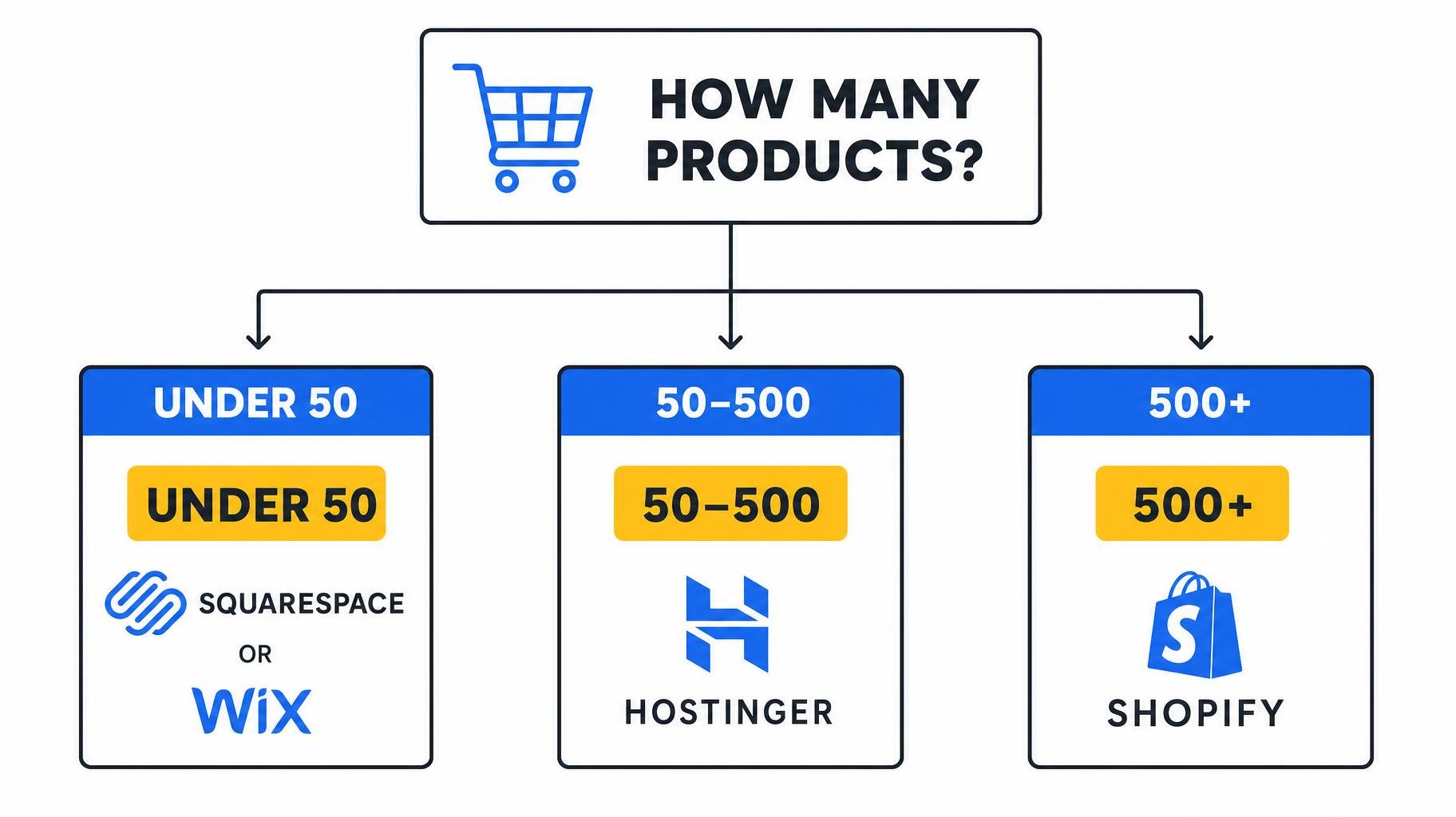
One reasoned dissent: plenty of guides push Shopify as the default “best” choice for everyone. Having actually run a large store on it, I’d push back — for a 20-product side hustle, Shopify’s fees and subscription cost are genuinely wasted money. Cheaper isn’t always worse; sometimes it’s just correctly sized for where you actually are.
Common Mistakes When Choosing an Ecommerce Builder
A lot of these mistakes come from comparing builders the same way you’d compare a plain informational website, when ecommerce has its own set of cost and scale traps.
Picking based on price alone. Many business owners choose the cheapest plan without checking transaction fees, then discover those fees quietly cost more than a pricier plan would have. Fix: calculate expected monthly sales volume and multiply by the transaction fee percentage before comparing sticker prices.
Underestimating catalog growth. A store that starts with 15 products often grows past 200 within a year. Fix: choose a platform with headroom, like Hostinger up to 500 products or Shopify’s effectively unlimited catalog, rather than one that caps you early.
Ignoring app costs on Shopify. The base subscription looks affordable until inventory apps, review widgets, and email tools stack up. Fix: budget an extra $20–50/month for essential apps from day one.
Choosing Squarespace or Wix’s lowest tier for ecommerce. Some entry plans don’t support selling at all, or carry a 3% fee that erodes margin fast. Fix: confirm the specific plan includes online selling and check its transaction fee before signing up.
Not planning for payment processor fees separately from platform fees. Some owners assume the platform’s advertised transaction fee is the whole story, then get surprised when their card processor adds its own cut on top. Fix: read the fine print on both the builder’s transaction fee and whatever payment gateway it routes through before you commit.
Skipping an SEO check before launch. Many owners build the store first and think about search visibility later. Fix: set your URL structure, product titles, and meta descriptions during setup, not after launch.
Next Steps
Start by counting your actual product count and expected monthly order volume. That single number should drive your decision more than any feature list. If you’re under 50 products and cost-sensitive, try Hostinger’s builder first; most stores can be live within a weekend. If you’re planning real scale, start a Shopify trial and stress-test it with your actual product data before committing to a paid plan.
A realistic launch timeline helps set expectations: most new store owners can get a Hostinger or Wix store live within a weekend if the catalog is under 30 products. Squarespace takes a little longer if you’re aiming for a highly polished look, usually 3–5 days. Shopify stores with large catalogs take longer not because the builder is slow, but because importing and organizing hundreds of products, plus configuring apps, is genuinely a bigger job — budget one to two weeks for a 500+ SKU launch.
FAQ
Is Hostinger really cheaper than Shopify for an online store?
Yes, on sticker price. Hostinger starts around $3.79–3.99/month versus Shopify’s roughly $29–39/month, plus Shopify’s roughly 2.9%+30¢ per-transaction fee. Hostinger charges 0% transaction fees. For low-volume stores, Hostinger is significantly cheaper overall; at high volume, app costs and features may shift the value equation.
Do I need coding skills or a big catalog to start an online store?
No. All four platforms here use drag-and-drop builders with no coding required. You also don’t need a big catalog — Hostinger, Wix, and Squarespace all work fine for stores with just 5–20 products, and setup typically takes a few hours to a weekend.
Can Shopify actually handle 1,000+ products?
Yes, from direct experience. I ran a personal store with over 1,000 listed items on Shopify for one and a half years, and checkout, inventory sync, and app integrations held up reliably throughout. The subscription and transaction fees are the real cost tradeoff, not platform stability.
Which builder has zero transaction fees?
Hostinger (0% on its Business plan), Wix (0% with Wix Payments), and Squarespace’s Commerce tier (0%, though its cheaper Business plan carries a 3% fee) all offer 0% options. Shopify always charges Shopify Payments processing fees, and adds an extra fee if you skip Shopify Payments entirely.
What’s the best website builder for a small online store on a tight budget?
Hostinger’s Business Website Builder, starting around $3.79–3.99/month with 0% transaction fees, is generally the cheapest way to launch a functioning online store in 2026, especially for small catalogs under 100 products where every dollar of margin counts.
Should I start with Shopify or grow into it later?
Unless you’re launching with a large catalog or wholesale operations from day one, starting cheaper with Hostinger or Wix and migrating to Shopify once you outgrow it is usually the more cost-effective path. Migration is more work later, but you’ll save months of unnecessary subscription and fee costs early on.
Do I need to worry about SEO when picking an ecommerce builder?
Yes, a little. Some platforms handle product-page SEO better out of the box than others, but for most small stores, the builder matters less than consistently writing clear product titles and descriptions. Shopify, Wix, and Squarespace all offer reasonable built-in SEO tools; Hostinger’s are more basic but workable for smaller catalogs.